
Noted

A mystery shopper that never leaves your showroom floor

Know why customers left to think it over, after every shift.

Noted listens on your showroom floor through the shifts you can't be there for. Then it hands you one page: the sizes and fabrics they asked for, the couple who left to measure up, and what to coach, in the words that were said.

1 of 3
What kind of store do you run?

First week free, every feature. One email when your spot opens, nothing else.

See a full sample shift report

Example: a furniture store, one shift as Noted would hand it back.

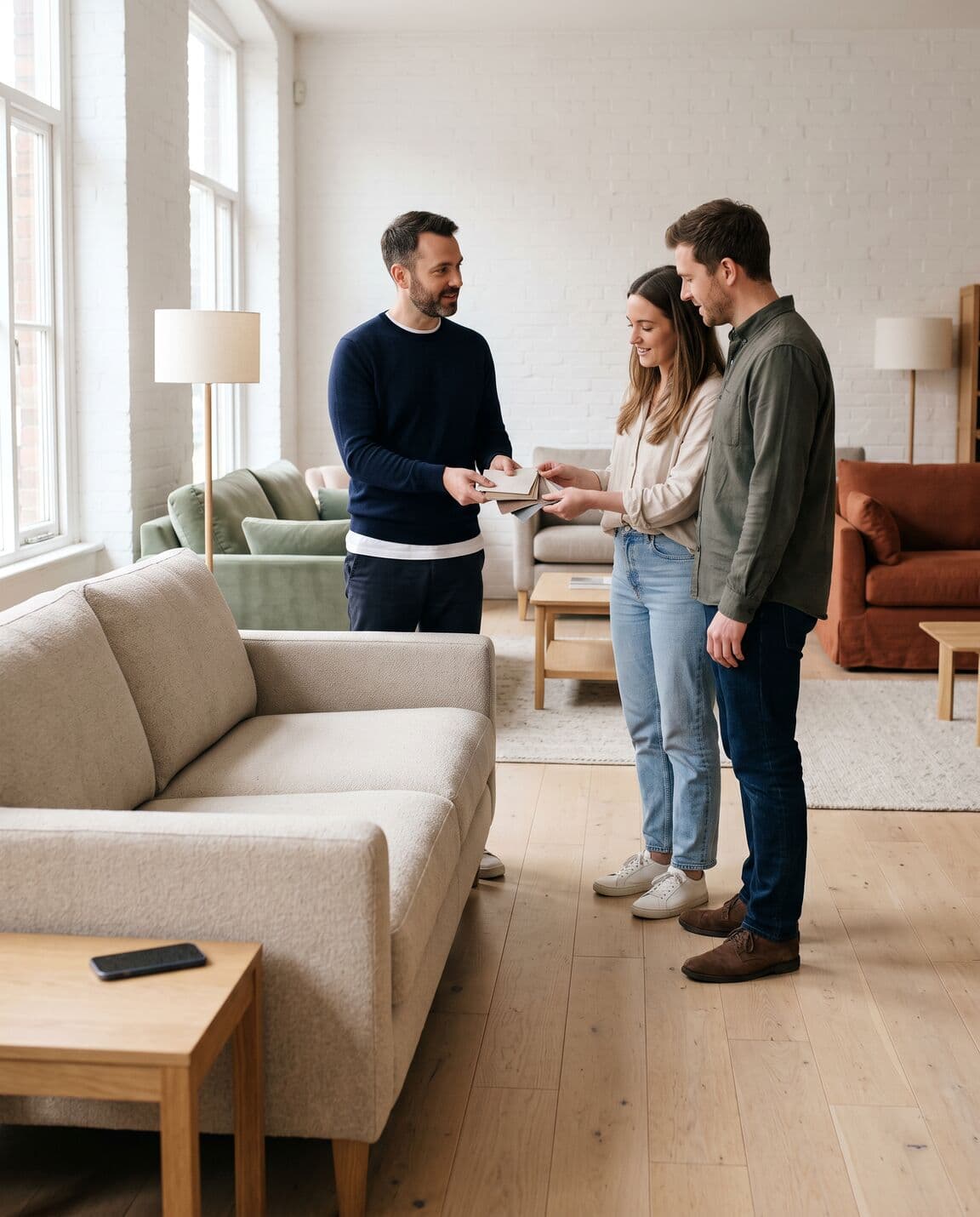
On the sofa floor of a furniture store, a sales consultant holds out fabric swatches to a couple standing by a sofa, a phone lying on a side table beside them

Shift report Saturday, October 24, 2026 ⁦10:00–18:00⁩

What customers told you

  • 10:22:00asked for, not offered2.5-seaterinteraction #7
    “Does this one come as a two-and-a-half-seater?”
  • 11:58:00complaintdelivery damageinteraction #23
    “Our sofa came with a tear in the arm, and nobody's called us back.”
  • 13:25:00lost salelead timeinteraction #34
    “Twelve weeks? We need it before Christmas. We'll look elsewhere.”

Mystery shoppers come a few times a year. Your customers are on the floor every day.

A sofa is decided over more than one visit, a tape measure and a second opinion. Noted hears each of those conversations while your team is with the customer.

Customers think out loud on the sofa.

Noted keeps what they say, as they said it.

A customer runs a tape measure along the arm of a sofa and asks about it while the consultant answers, a book of fabric swatches in his hand
  • 11:24

    “Is it going to be in the sale next month?”

    What customers wait for

    The sale they're holding out for, the price online: what makes them wait.

  • 14:30

    “Still nothing with the chaise on the left?”

    Demand you can order in

    Every size, fabric and layout you couldn't offer, counted across the week.

  • 15:40

    “The bed came with a bag of screws and no instructions.”

    Complaints, before they become reviews

    A torn arm on delivery, a missing part. You hear it the same day, not on Google a month later.

  • 17:20

    “We'll measure up and come back.”

    Be-backs, with the moment they left

    The customer who left to think it over: when it happened, and what was said.

How often your team does what sells a sofa.

Write your way of selling once, or paste the one you train to. After every shift, Noted scores each conversation on the floor against it and hands you this page: the step that slipped first, what to coach, and the moments behind it.

Shift report Saturday, October 24, 2026 · Sofas ⁦10:00–18:00⁩

57Getting thereoverall / 100

Where you stand

57this shift

  • Follow-upFocus of the week30.8%
    8 happened · 3 partial · 15 missed · best run: 3 in a row · n/a in 382 moments
    • 13:26:00Missinteraction #34
      “No problem, have a think about it.”

      Let a couple put off by the lead time leave without a quote, swatches or a call-back.

    • 14:48:00Wininteraction #45
      “Take these swatches home, and I'll email the quote with today's price held for a week.”

      Gave a customer who wasn't ready something to take home and a reason to come back.

  • Lead time46.7%
    14 happened · 7 partial · 9 missed · best run: 4 in a row · n/a in 341 moment
    • 15:20:00Missinteraction #50
      “It'll be with you soon, don't worry.”

      Promised “soon” on a made-to-order sofa with a ten-week lead time.

  • Measured up53.6%
    15 happened · 5 partial · 8 missed · best run: 5 in a row · n/a in 361 moment
    • 12:12:00Wininteraction #25
      “Before you fall for it, have you measured the doorway and the stairs?”

      Checked the access before the order, and moved the customer to the model whose arms come off.

  • Room first56.5%
    26 happened · 9 partial · 11 missed · best run: 7 in a row · n/a in 182 moments
    • 10:38:00Wininteraction #10
      “Tell me about the room. How big is it, and who's on the sofa most evenings?”

      Asked about the room and who uses it before showing anything, and narrowed six sofas to two.

    • 16:40:00Missinteraction #58
      “This one's really popular. Everyone loves the grey.”

      Recommended the bestseller before asking about the room; the customer had a dog and a cream rug.

  • Farewell75
    3 / 0–4 · 1 uncertain · n/a in 24Score anchors
    0
    Customer left in silence
    2
    Thanked, but not invited back
    4
    Thanked warmly and invited back
  • Welcome81.7%

    49 happened · 6 partial · 5 missed · best run: 14 in a row · 1 uncertain · n/a in 4

Fix these

  1. Give every customer who wants to think it over something to take home: “Take these swatches, and I'll email the quote with today's price held for a week.” Today that happened for fewer than one in three.

  2. Say the lead time before the close, every time: “This one's made to order, so it's ten weeks to your door.” Today it was said up front on fewer than half.

  3. Ask about the room before the sofa: “How big is the room, and who's on it most evenings?” Then pick two to sit on.

When it happened

10:0018:00

WinMissWhat customers told you

A slow morning and a crowded afternoon. Customers were welcomed all day and most were asked about their room, but once the floor filled after lunch the lead time went unsaid until the close, and customers who left to think went without a quote, swatches or a call-back. A left-hand chaise was asked for three times and isn't on the floor, and a couple who needed their sofa before Christmas left for another store.
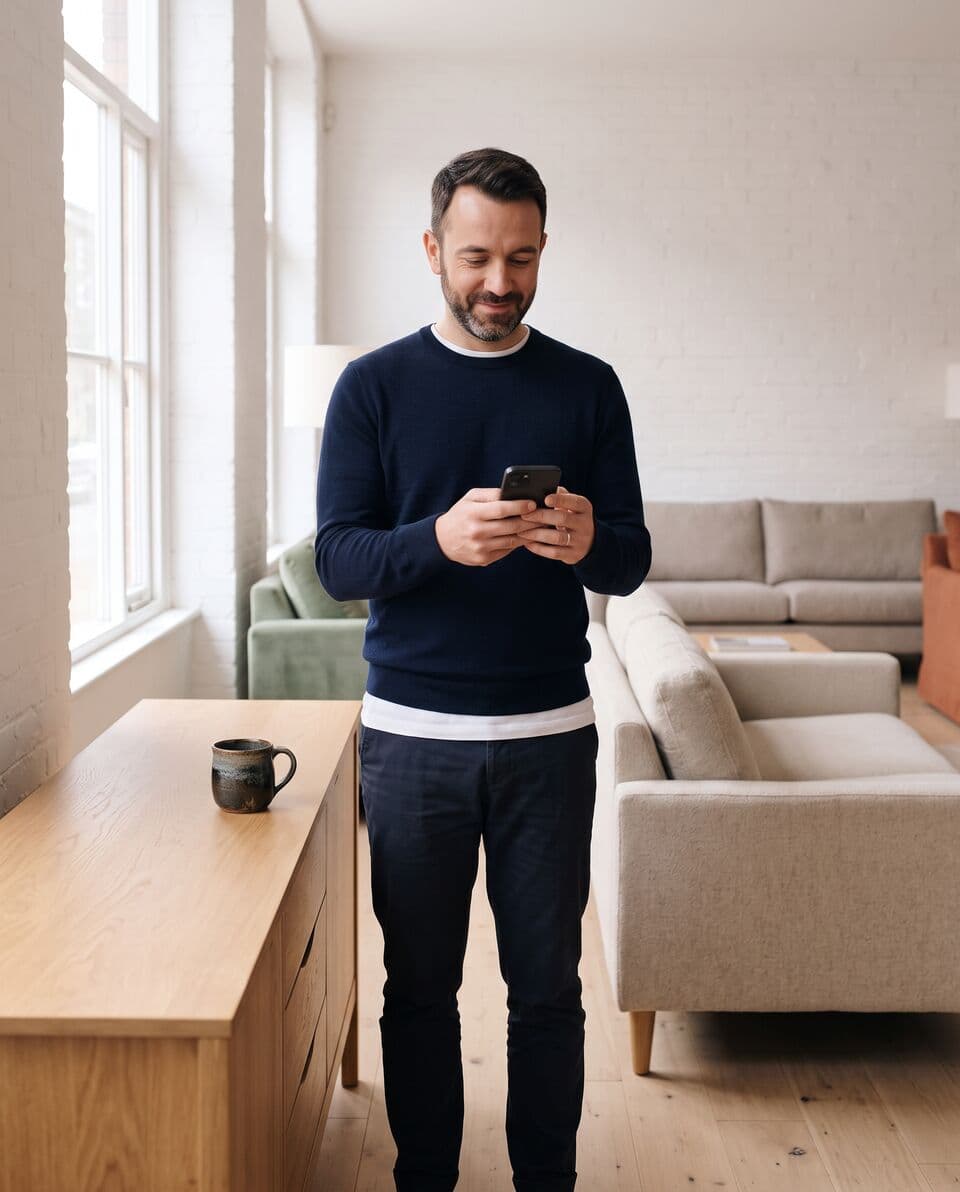
Example: one Saturday on a furniture store's sofa floor, exactly as Noted hands it back.See a full sample shift report

How it works

  1. 1

    Listen first

    Put any phone where customers decide: on the sofa floor, or at the desk where orders are written. Tap start at open, stop at close. Your free week shows you the floor as it is.

  2. 2

    Write the standard

    Start from the retail template, paste your sales process, or answer a few questions. Noted scores every conversation against it, with the quote and the time.

  3. 3

    Coach one thing a week

    One page per shift, read before the doors open. One focus for the week, and trends for a quiet Tuesday.

Fair to your sales team and safe for your customers.

  • Compliant by design

    Built to meet recording law: post the notice your jurisdiction requires, and nothing is switched on until you say so.

  • Audio doesn't stick around

    Only the transcript and the scores are kept. Audio is deleted after transcription unless you choose a retention window.

  • Customers are never identified by voice

    Speakers are told apart within a conversation, and no customer is recognised from one visit to the next. Recognising your own staff by voice is off unless you switch it on and name your team yourself.

  • Your team sees what you see

    Everyone who records a shift can read their own page, and every note carries the moment it came from.

Questions

We already walk the floor and do mystery shops.

Keep them. A walk round tells you the floor looks right. It can't tell you that a left-hand chaise was asked for three times on Saturday, or that the lead time stopped being mentioned once the floor filled. Run Noted next to it for your free week and see what it catches that the walk round didn't.

Our showroom is big, and the team moves around it.

Put the phone where most decisions happen: on your busiest floor, like the sofas, or at the desk where orders are written. A larger store runs one per area, and each report names the area it heard. Noted only hears what's said near it.

Is it OK to record in the store?

Noted is built to comply with recording law: you post the notice your jurisdiction requires, audio is deleted after transcription, and nobody is identified by voice. Rules differ by country, so check yours before you switch anything on; we'll help with the wording.

Our sales process isn't written down.

Start from the retail template, answer a few questions, or paste what you have: a training sheet, a checklist, an email to the team. Noted turns it into a standard you can edit, and proposes changes once it has heard enough shifts.

What do I need to run it?

Any phone, tablet or laptop with a browser and a microphone. No extra hardware, no app store, no installer.

What does it cost?

Your first week is free: the full product, every feature, no limits. Early-access pricing after that goes to the list first, before anything is public.

Which languages does it work in?

English and Persian. The interface, the reports and the transcripts handle both, with Persian right to left and Persian dates and digits.

A note from the founder

I built Noted for my own counter, because the shifts I wasn't there for were the ones I knew least about.

Every pilot starts with me. I'll help you put a phone on your busiest floor, write your first standard with you, and read your first report with you.

Run it for a week alongside what you already do: the walk round, the Monday sales meeting. If it doesn't show you something you'd have missed, tell me that too.

Rasoul, founder

Try it on your own showroom floor for a week.

Early access opens in small batches, and it starts with a free week. Join the list and stop guessing why Saturday's customers didn't buy.

1 of 3
What kind of store do you run?

First week free, every feature. One email when your spot opens, nothing else.

AI mystery shopper for furniture stores — Noted