Noted

A mystery shopper that never leaves your fitting rooms

Know which sales walked out of the fitting room, after every shift.

Noted listens by your fitting rooms through the shifts you can't be there for. Then it hands you one page: the sizes they asked for, the customer who left to buy online, and what to coach, in the words that were said.

1 of 3
What kind of store do you run?

First week free, every feature. One email when your spot opens, nothing else.

See a full sample shift report

Example: a clothing store, one shift as Noted would hand it back.

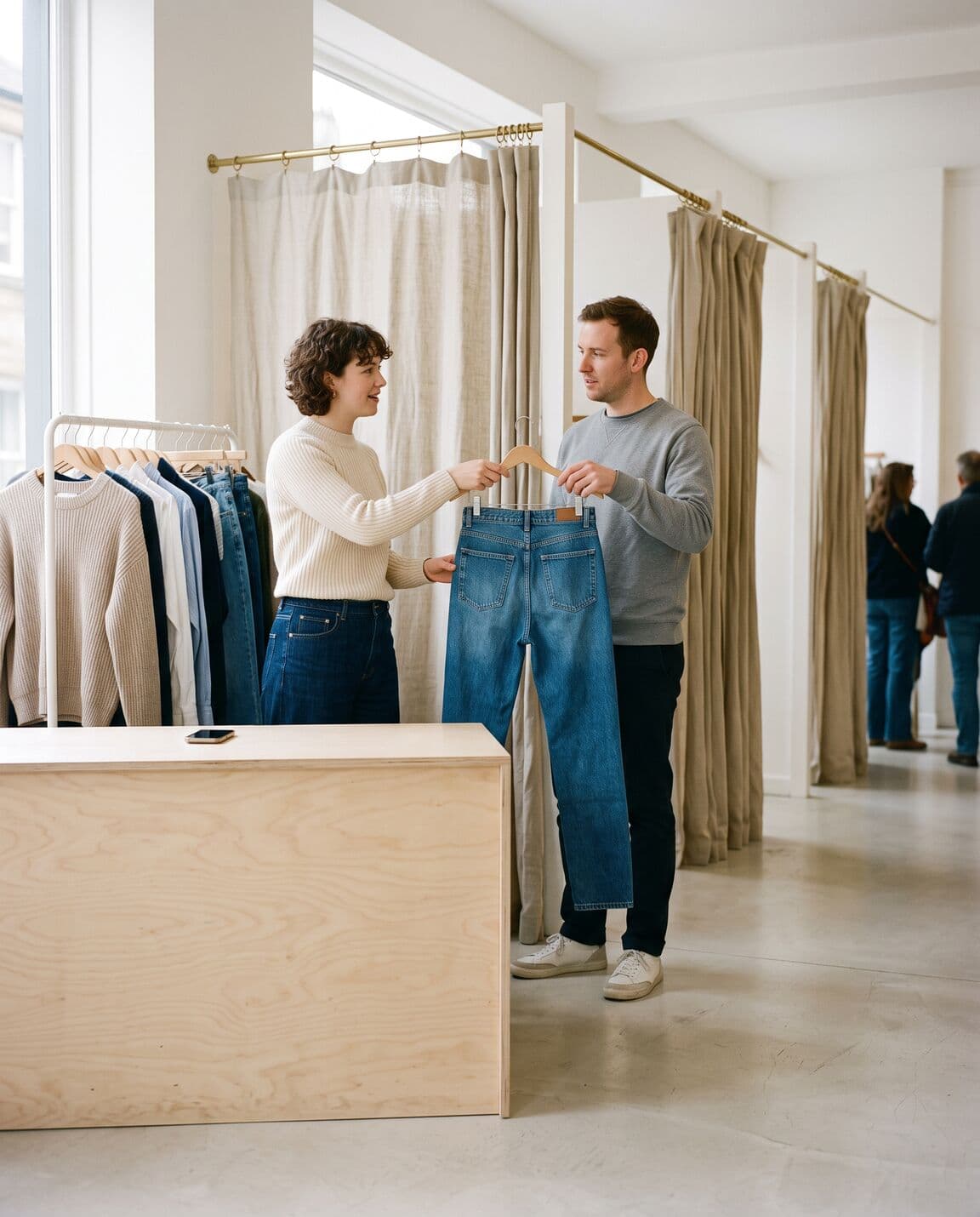
By a clothing store's fitting rooms, a sales associate in a cream knit jumper hands a pair of jeans on a hanger to a customer in a grey sweatshirt, a phone lying on the desk in front of her

Shift report Saturday, October 24, 2026 ⁦10:00–19:00⁩

What customers told you

  • 10:40:00asked for, not offeredwide-leg jeans, 12interaction #10
    “Have you got the wide-leg jeans in a twelve?”
  • 12:28:00complaintseaminteraction #32
    “The seam on these went after two washes.”
  • 13:47:00lost salesize 10interaction #45
    “No ten? I'll just order it online, then.”

Mystery shoppers try on a few times a year. Your customers try on every day.

A sale in clothing is made or lost between the rail and the mirror: the next size, a second opinion, something to go with it. Noted hears each of those conversations while your team is with the customer.

The fitting rooms hear what the till never does.

Noted keeps what customers say there, as they said it.

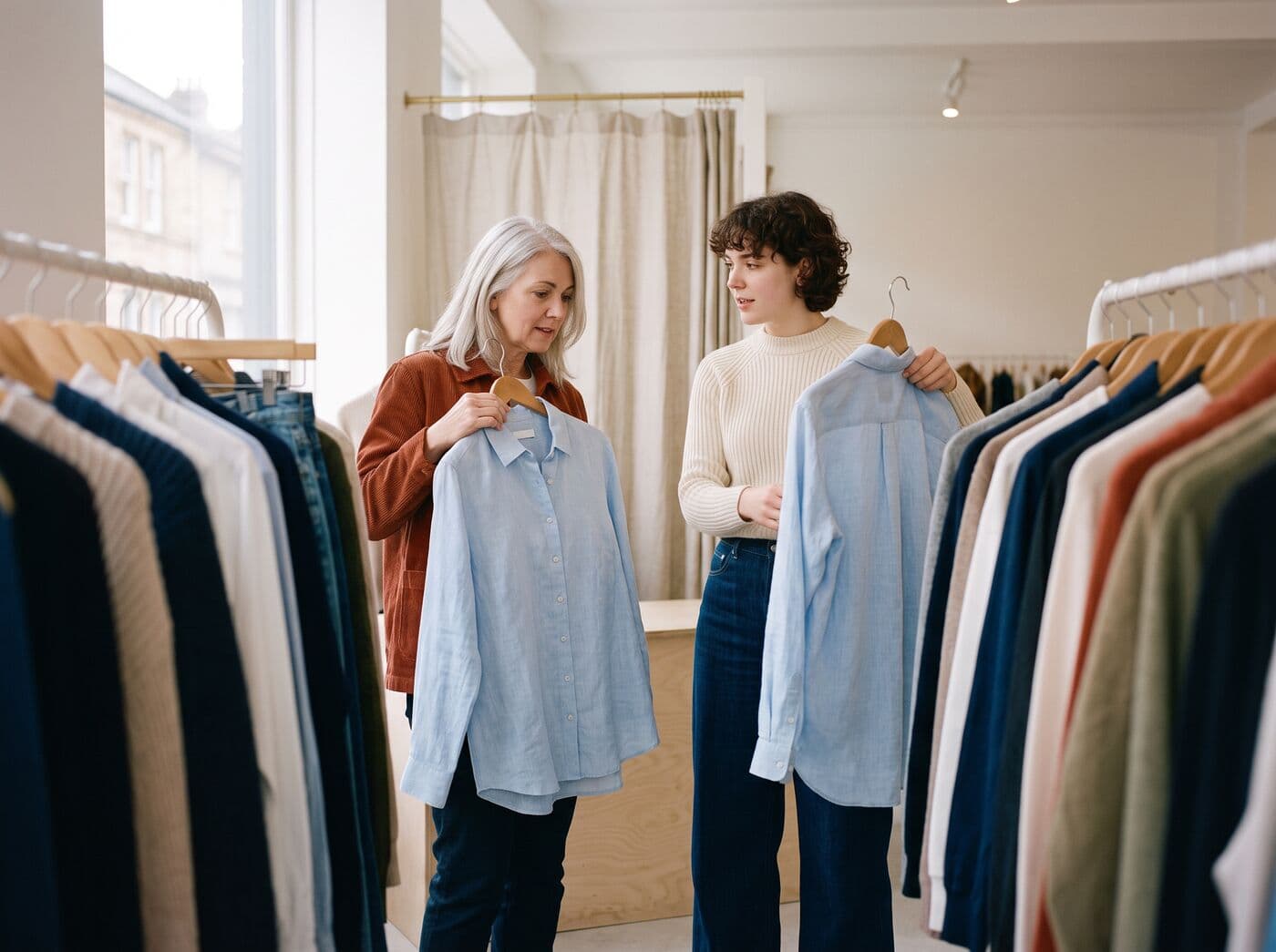
Between two rails of clothes, a customer in a rust corduroy jacket holds up a pale blue shirt and asks the associate, who holds out the same shirt in another size
  • 11:52

    “It's cheaper on your website. Can you match that?”

    Where the price stopped them

    Your own website's price, next week's sale: what made them put it back.

  • 14:33

    “I've been waiting ages for someone to bring me a different size.”

    Complaints, before they become reviews

    A long wait at the fitting rooms, a seam that went. You hear it the same day, not on Google a month later.

  • 16:45

    “Still no twelve in the wide-leg?”

    Sizes you could have sold

    Every size, length and colour you didn't have, counted across the week, so the next order fits.

  • 18:15

    “Only in black? I wanted the green. I'll leave it.”

    Lost sales, with the moment they left

    The customer who put it back: when it happened, and what was said.

How often your team does what turns a try-on into a sale.

Write your way of selling once, or paste the one you train to. After every shift, Noted scores each conversation by the fitting rooms against it and hands you this page: the step that slipped first, what to coach, and the moments behind it.

Shift report Saturday, October 24, 2026 · Fitting rooms ⁦10:00–19:00⁩

59Getting thereoverall / 100

Where you stand

59this shift

  • Next sizeFocus of the week38.6%
    17 happened · 6 partial · 21 missed · best run: 4 in a row · n/a in 662 moments
    • 13:46:00Missinteraction #45
      “Sorry, that's all we've got out.”

      Left a customer who needed a ten with nothing: no stockroom, no other store, no delivery home.

    • 16:10:00Wininteraction #72
      “Let me grab you the ten. If we're out, I can check the other store for you.”

      Went for the next size straight away, with a plan if it wasn't there.

  • Styling46.8%
    29 happened · 8 partial · 25 missed · best run: 5 in a row · n/a in 482 moments
    • 13:02:00Wininteraction #39
      “These would work with the cream knit by the door. Shall I bring one in your size?”

      Suggested a knit to go with the trousers that fitted, and brought it to the room in the customer's size.

    • 17:35:00Missinteraction #89
      “Just the jeans, then? I'll take the rest back.”

      Took back the tops that didn't work without suggesting another to go with the jeans that did.

  • Check-in53.2%
    41 happened · 14 partial · 22 missed · best run: 6 in a row · n/a in 331 moment
    • 14:34:00Missinteraction #53
      “Sorry, it's just me on today. What did you need?”

      Nobody had checked the fitting rooms since lunch; this customer had been waiting for another size the whole time.

  • Started a room57.7%
    30 happened · 4 partial · 18 missed · best run: 7 in a row · n/a in 581 moment
    • 10:21:00Wininteraction #6
      “Hi! Shall I start a room for you while you keep looking?”

      Started a room while the customer was still browsing, so they kept looking and tried on four pieces.

  • Welcome78.8%

    82 happened · 12 partial · 10 missed · best run: 15 in a row · 1 uncertain · n/a in 6

  • Farewell80
    3.2 / 0–4 · 2 uncertain · n/a in 52Score anchors
    0
    Customer left in silence
    2
    Thanked, but not invited back
    4
    Thanked warmly and invited back

Fix these

  1. When a size isn't out, don't stop at no: “Let me check the back. If we're out, I can find it at the other store or send it to your home.” Today that happened for fewer than two in five.

  2. Check every room within three minutes, with the next size ready: “How are you getting on? Shall I bring the ten as well?” Today it held for about half.

  3. Suggest one thing to go with what fits: “These would work with the cream knit by the door. Shall I bring one in your size?” Then let them decide in the mirror.

When it happened

10:0019:00

WinMissWhat customers told you

A steady morning and a packed afternoon. Customers were welcomed all day and rooms were started early, but once the floor filled after lunch nobody checked the fitting rooms, and customers who needed another size were told that what was out was all there was. The wide-leg jeans in a twelve were asked for three times and never found, one customer left to order a ten online, and another left when the piece they wanted came only in black.
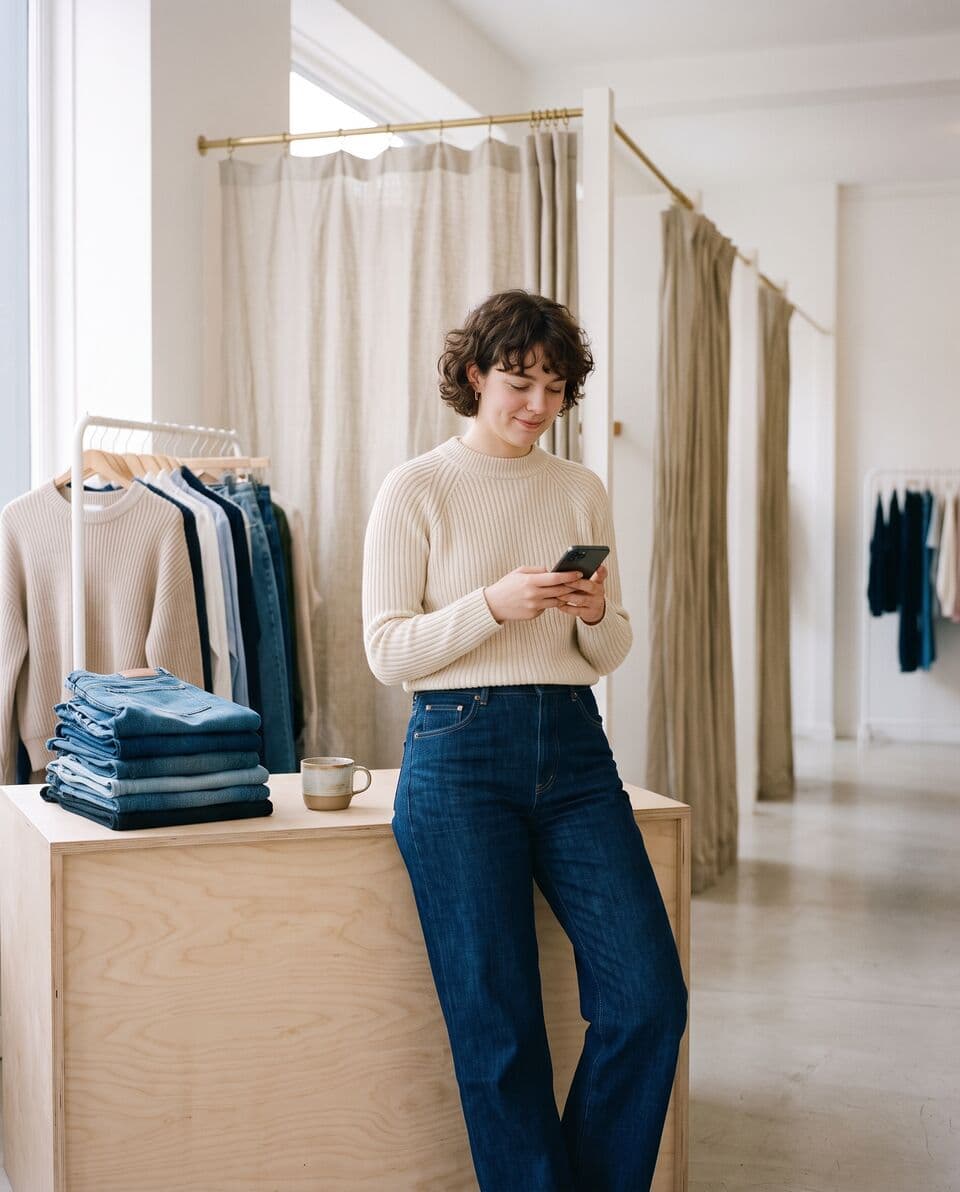
Example: one Saturday at a clothing store's fitting rooms, exactly as Noted hands it back.See a full sample shift report

How it works

  1. 1

    Listen first

    Put any phone on the desk by your fitting rooms, where rooms are started and sizes are fetched: outside the rooms, never in them. Tap start at open, stop at close. Your free week shows you the floor as it is.

  2. 2

    Write the standard

    Start from the retail template, paste your service steps, or answer a few questions. Noted scores every conversation against it, with the quote and the time.

  3. 3

    Coach one thing a week

    One page per shift, read before the doors open. One focus for the week, and trends for a quiet Tuesday.

Fair to your team, and discreet by the fitting rooms.

  • Compliant by design

    Built to meet recording law: post the notice your jurisdiction requires, and nothing is switched on until you say so.

  • Audio doesn't stick around

    Only the transcript and the scores are kept. Audio is deleted after transcription unless you choose a retention window.

  • Customers are never identified by voice

    Speakers are told apart within a conversation, and no customer is recognised from one visit to the next. Recognising your own staff by voice is off unless you switch it on and name your team yourself.

  • Your team sees what you see

    Everyone who records a shift can read their own page, and every note carries the moment it came from.

Questions

We already walk the floor and do mystery shops.

Keep them. A walk round tells you the rails look right. It can't tell you that the wide-leg jeans in a twelve were asked for three times on Saturday, or that nobody checked the fitting rooms once the floor filled after lunch. Run Noted next to it for your free week and see what it catches that the walk round didn't.

Where does the phone go in a clothing store?

On the desk by the fitting rooms, where rooms are started and sizes are fetched: that's where a try-on becomes a sale, or doesn't. Never inside a room. A larger store runs one per floor, and each report names the area it heard. Noted only hears what's said near it.

Is it OK to record near the fitting rooms?

Noted is built to comply with recording law: you post the notice your jurisdiction requires, audio is deleted after transcription, and nobody is identified by voice. The phone stays outside the rooms, never in them. Rules differ by country, so check yours before you switch anything on; we'll help with the wording.

Our service steps aren't written down.

Start from the retail template, answer a few questions, or paste what you have: a training sheet, a checklist, an email to the team. Noted turns it into a standard you can edit, and proposes changes once it has heard enough shifts.

What do I need to run it?

Any phone, tablet or laptop with a browser and a microphone. No extra hardware, no app store, no installer.

What does it cost?

Your first week is free: the full product, every feature, no limits. Early-access pricing after that goes to the list first, before anything is public.

Which languages does it work in?

English and Persian. The interface, the reports and the transcripts handle both, with Persian right to left and Persian dates and digits.

A note from the founder

I built Noted for my own counter, because the shifts I wasn't there for were the ones I knew least about.

Every pilot starts with me. I'll help you put a phone by your fitting rooms, write your first standard with you, and read your first report with you.

Run it for a week alongside what you already do: the walk round, the Monday sales figures. If it doesn't show you something you'd have missed, tell me that too.

Rasoul, founder

Try it by your own fitting rooms for a week.

Early access opens in small batches, and it starts with a free week. Join the list and stop guessing why Saturday's try-ons didn't sell.

1 of 3
What kind of store do you run?

First week free, every feature. One email when your spot opens, nothing else.

AI mystery shopper for clothing stores — Noted